
Executive Function & KS3 Science: Low-Anxiety Learning UI
Discover why traditional worksheets can cause executive function friction for neurodivergent KS3 science pupils and how calm UI design can support working memory.
When a Key Stage 3 pupil sits down with a traditional science worksheet, the barrier to learning is rarely a lack of scientific curiosity. More often, it is a conflict between the page layout and the architecture of the teenage brain.
For neurodivergent 11-to-14-year-olds (including pupils with ADHD, autism, dyslexia, or executive function challenges) a standard text-heavy worksheet can present an immediate cognitive bottleneck. Before a student can even begin to process a concept like ecosystems or gravity, their brain must navigate a minefield of non-essential demands:
- Executive Function Friction: Deciphering dense paragraphs, prioritising multi-step written instructions and managing page organisation consume significant working memory.
- Task Paralysis: A blank answer box or an overwhelming wall of text can trigger immediate demand avoidance, driven by sensory and cognitive overload rather than a lack of capability.
- Performance Anxiety: Prominent countdown clocks, visible error counters and red-ink feedback mechanisms activate the brain’s stress response, diverting energy away from scientific problem-solving.
This November, as the global education community marks World Science Day for Peace and Development, UNESCO’s core focus turns toward making scientific knowledge universally accessible and inclusive. True accessibility in Key Stage 3 STEM education demands more than just simplifying content, it requires reimagining the user interface through which young people experience science.
De-Cluttering the Learning Interface for Neurodivergent Pupils
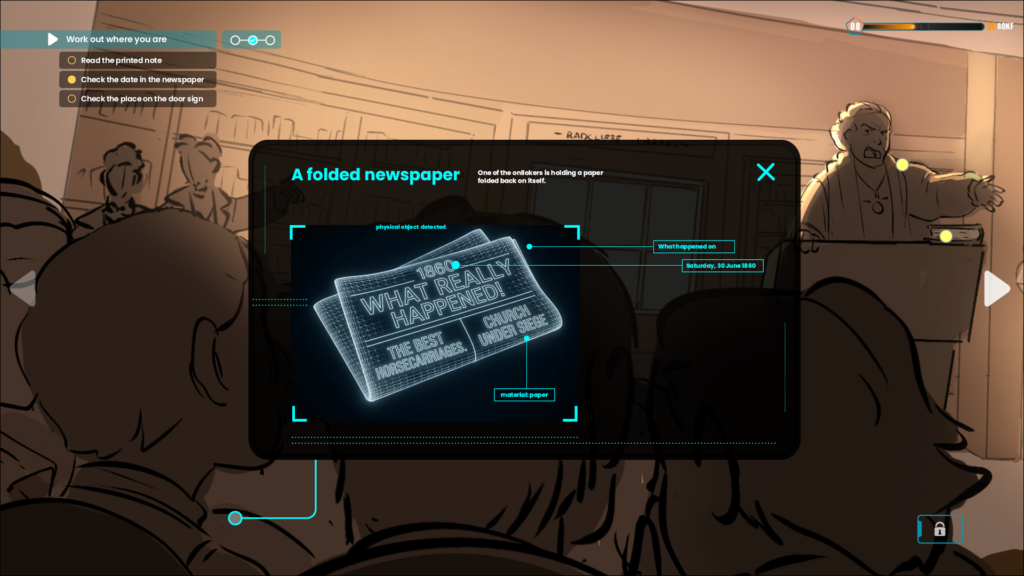
To understand how thoughtful digital design can unlock scientific reasoning, The Vault’s interface strategy is focused on shifting away from traditional academic layouts towards calm, intent-driven user environments.
Traditional Digital Worksheets | Low-Anxiety Inclusive Game UI |
On-screen timers & countdowns | Unhurried, self-paced exploration |
Cluttered menus & sidebars | Clear, discrete controls |
Punitive scoring & red mark alerts | Constructive, non-punitive hints with the ability to retry puzzles |
Text-first instruction blocks | Visual-first mechanics & direct manipulation |
This design approach is rooted in the principle that removing non-essential visual elements can be just as critical as the learning content itself. When an interface features flashing countdowns or cluttered navigation bars, a student’s working memory can be consumed by managing screen distractions rather than processing core scientific concepts.
Inside The Vault, this philosophy shapes every interaction:
- Eliminating Temporal Stress: Countdown timers are stripped away entirely. Scientific inquiry requires space to make hypotheses, observe outcomes, and re-test without the artificial pressure of a ticking clock.
- Contextual Controls over Clutter: Rather than displaying complex navigation menus, controls only appear when relevant to the current task. If a pupil is adjusting longitude and latitude, the focus is on a clear map and grid system with dials that can be adjusted.
- Safe Trial-and-Error Loops: When an experiment yields an unexpected result, the interface offers constructive visual feedback rather than negative scoring or loud audio alerts. Rejection sensitivity is minimised, allowing students to treat mistakes as neutral data points.
From Passive Text to Active Discovery in Key Stage 3 Science
By pairing visual-first dual coding with low-anxiety interface design, complex Key Stage 3 concepts can become accessible without watering down the national curriculum. Pupils directly manipulate variables such as gravity and mass to test their effect on items, or adjust temperature and salinity to create a healthy underwater ecosystem.
When we lower the friction created by traditional layouts, neurodivergent learners can stop spending their mental energy navigating the page and start using it to think like scientists.
🚀 Experience The Vault: Founders’ Edition
The Vault is an interactive, story-led learning platform that transforms Key Stage 3 science into an accessible time-travel adventure. Designed alongside educators and with an understanding of educational neuroscience , it provides zero-prep, low-anxiety discovery for home and school study.
- For Schools: Access automated class mastery insights with zero manual marking. Request Free School Trial Access.
- For Families: Help your child build science confidence at their own pace. Explore Parent Free Trial Access.
Read more about our inclusive STEM methodology on our Vault Learning News Hub.